
What Is Sclerosant?
If you’ve been researching sclerotherapy as a treatment for spider veins or varicose veins, you may have seen the word sclerosant and wondered what it means. Simply put, the sclerosant is the solution used during treatment that makes sclerotherapy effective. Understanding what it is and how it works can help you feel more confident when choosing vein treatment in the Carolinas.
What does Sclerosant do?
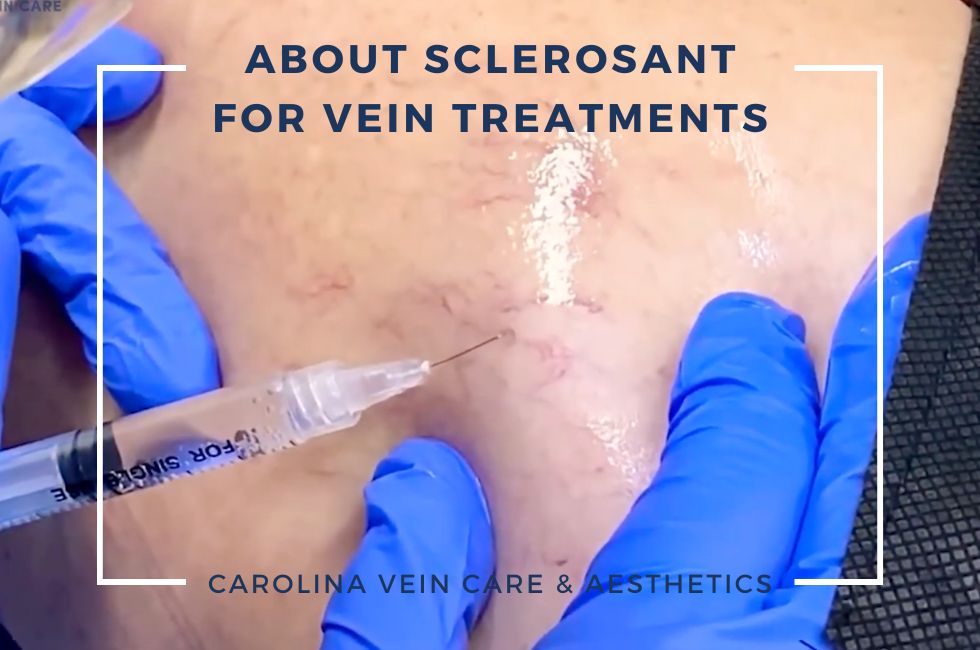
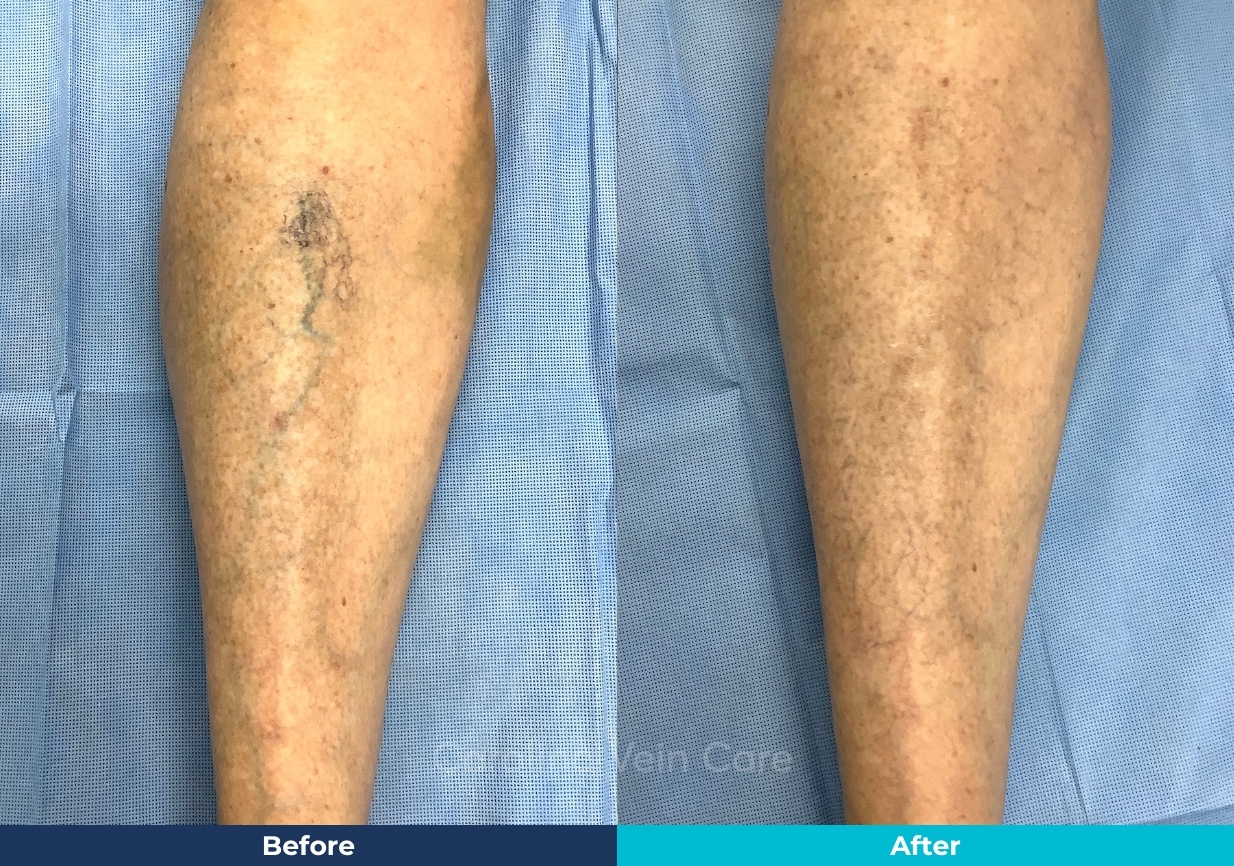
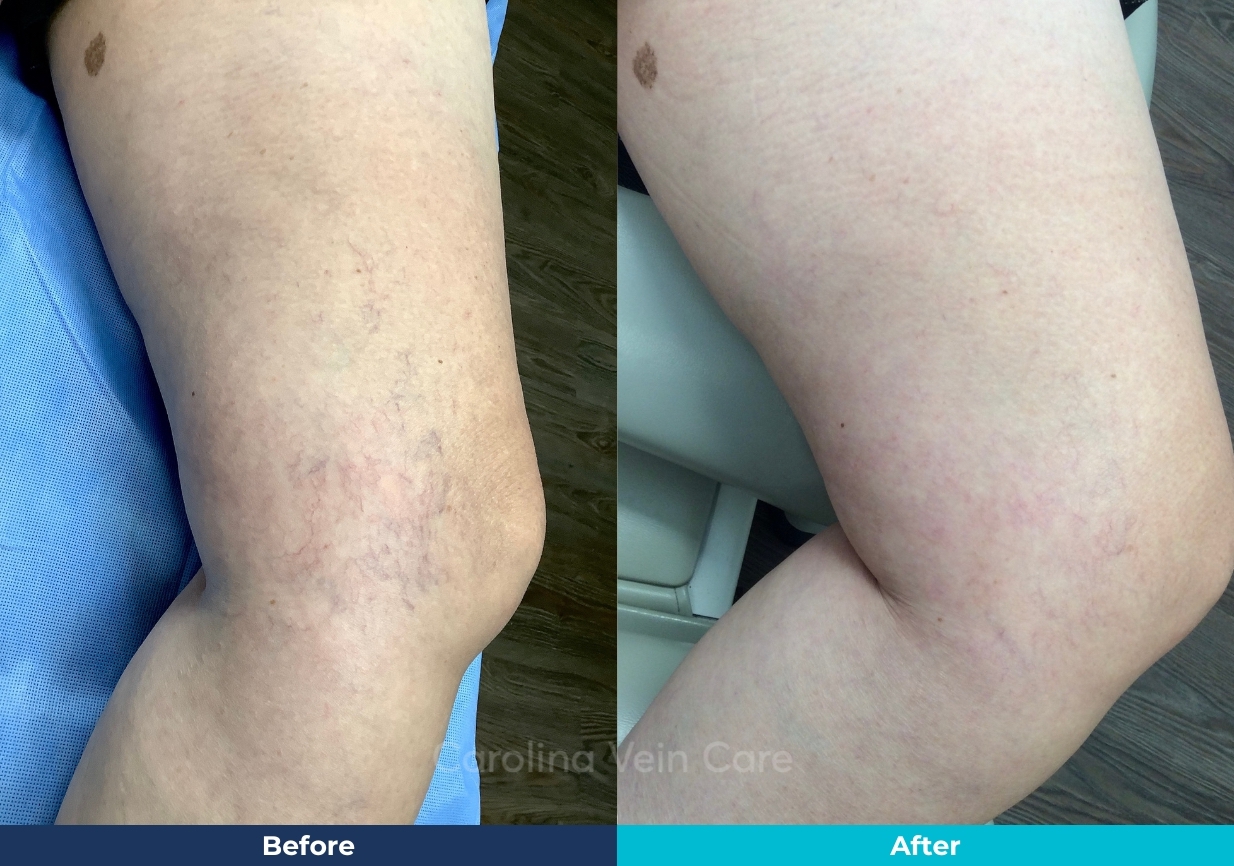
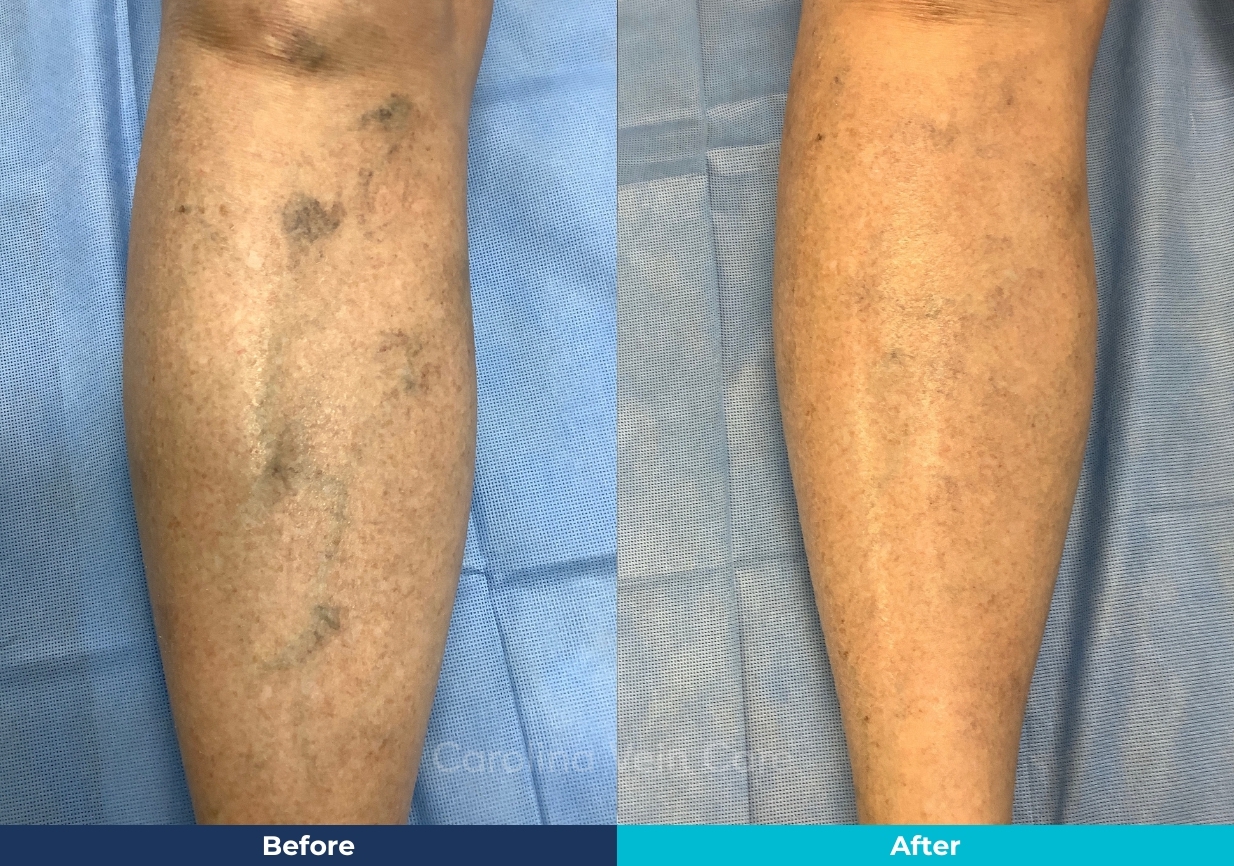
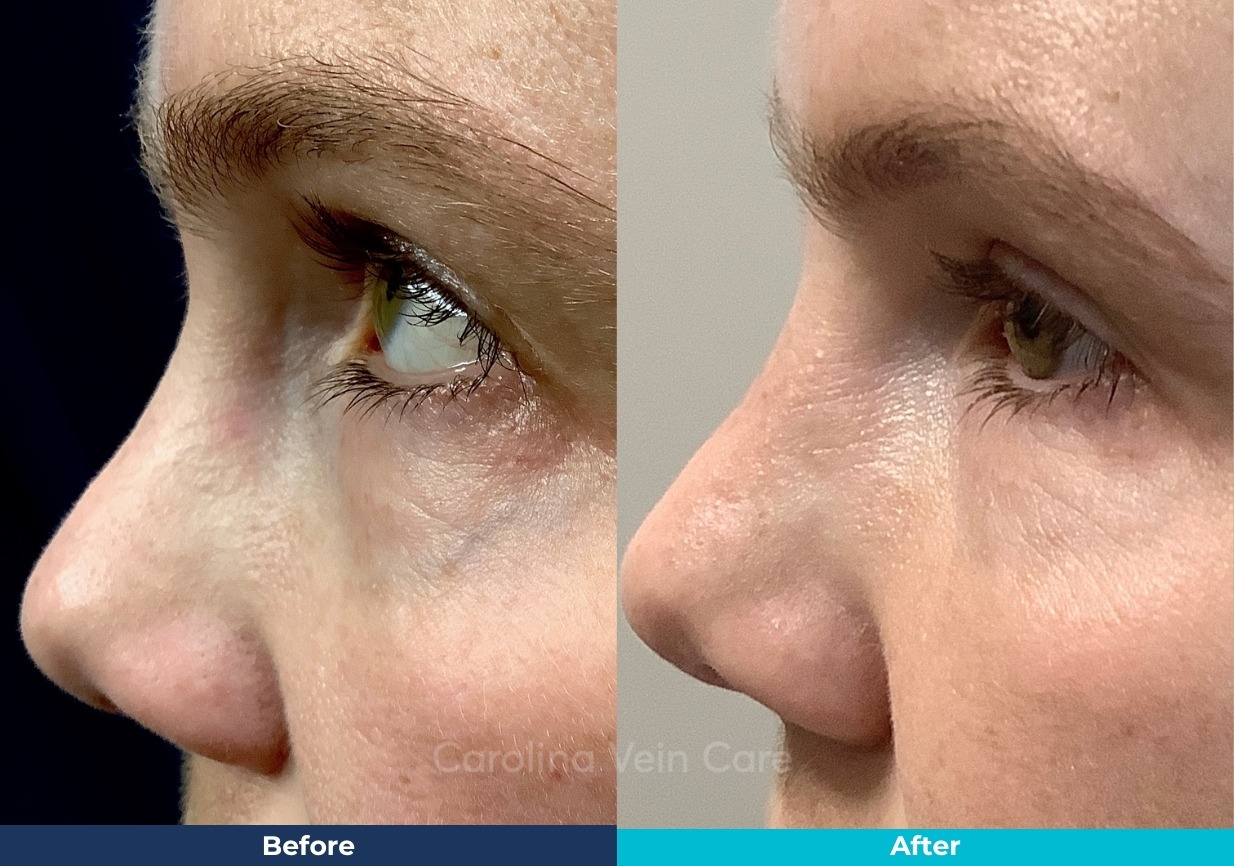
A sclerosant is a medical solution that is injected directly into a problem vein during sclerotherapy. Its purpose is to irritate the inner lining of the vein wall, causing the vein to collapse and seal shut.
Once closed, the body naturally reroutes blood to healthier veins and gradually absorbs the treated vein until it fades from view.
Sclerosants can be prepared in liquid form or as a foam, depending on the size and location of the vein being treated. Both are widely used and carefully chosen by your physician for the safest and most effective outcome.
How Does It Work?
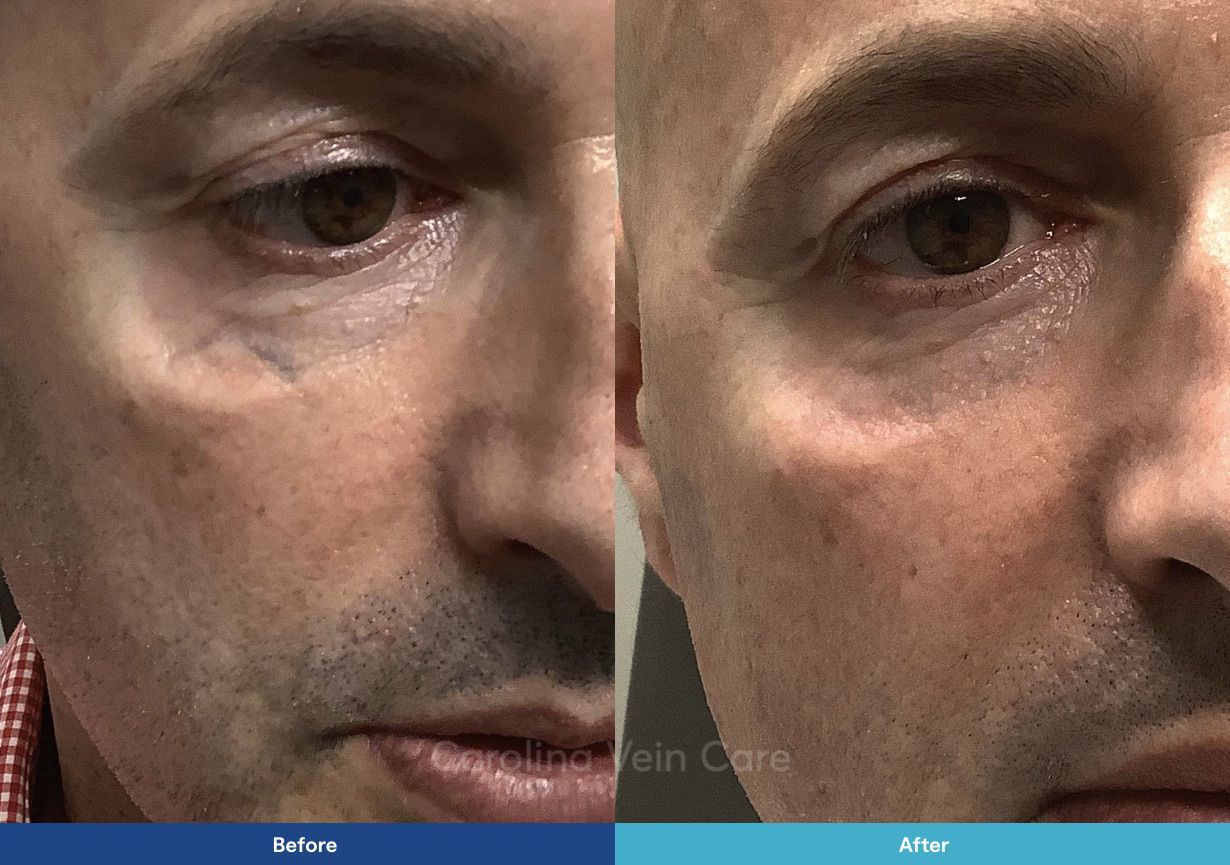
Different Types of Sclerosants
There are several kinds of sclerosants, but the two most common used in modern vein care are:
- Detergent-type sclerosants (e.g., polidocanol, sodium tetradecyl sulfate): These are effective, safe, and well-tolerated, making them the most frequently used solutions in practices like Carolina Vein Care.
- Hypertonic saline or solutions with high salt concentration: Less commonly used today, as they can sometimes cause more irritation or discomfort.
Your physician will determine the best option for your vein type, treatment goals, and overall health.
Are Sclerosants Safe?
Yes. When performed by an experienced, board-certified vascular specialist, sclerotherapy with sclerosants is considered safe and minimally invasive. Side effects are generally mild and temporary, such as slight redness, swelling, or itching at the injection site. These typically resolve within a few days.
At Carolina Vein Care, we use Asclera® (polidocanol)—an FDA-approved sclerosant known for its excellent safety profile and predictable results. Dr. Jackson and Dr. Park carefully adjust the formulation and volume based on the vein’s size and location. In most cases, liquid polidocanol is used without a strict volume limit, – not exactly. We typically do limit the dosage of liquid sclerosant while foam sclerotherapy typically involves up to 10 mL of foam per session and occasionally up to 15 mL when needed for larger or more extensive veins.
This individualized approach ensures effective treatment while maintaining the highest safety standards.
Why Sclerosants Matters
The sclerosant is the key to why sclerotherapy works. It transforms a quick in-office procedure into a highly effective treatment that eliminates unwanted veins with little to no downtime. By understanding what it is and how it functions, patients can better appreciate the science behind their results.
Moving Forward with Expert Vein Care
A sclerosant may sound technical, but it’s simply a liquid medication (or solution) that makes sclerotherapy one of the most trusted treatments for spider and varicose veins.
Whether used in liquid or foam form, it helps deliver lasting results safely and effectively. At Carolina Vein Care, our specialists tailor every treatment to your unique needs so you can enjoy smoother, healthier legs with confidence.