Nose Vein Treatment in Simpsonville, SC
Small red, purple or blue veins around the nose can become surprisingly noticeable because of their location at the center of the face. Dr. Julie Park treats appropriate visible nose veins using precise, minimally invasive sclerotherapy.
Visible veins can develop along the sides of the nose, around the nostrils or across nearby facial skin. Some are very fine vessels, while others are larger blue or purple veins that remain visible even beneath makeup.
At Carolina Vein Care & Aesthetics in Simpsonville, Dr. Julie Park evaluates the size, depth, location and pattern of each visible vessel before recommending treatment. Her goal is to reduce the appearance of unwanted veins while maintaining a natural-looking result.
Meet Dr. Julie Park
When treating visible veins in the center of the face, experience and precision matter.
Dr. Julie Park is board-certified in both Interventional Radiology and Diagnostic Radiology and has more than 20 years of medical experience in venous and aesthetic medicine.
Her training gives her a detailed understanding of vascular anatomy, while her experience in cosmetic vein care allows her to approach visible facial veins with both medical judgment and an aesthetic eye.
Dr. Park treats cosmetic veins in delicate areas including the nose, under-eye area, temples, forehead, chin and hands. Each vessel is evaluated individually before treatment is recommended.
- Board-Certified in Interventional Radiology
- Board-Certified in Diagnostic Radiology
- Fellowship-Trained at Northwestern University
- More than 20 years of medical experience
What Are Visible Nose Veins?
Visible nose veins are superficial blood vessels that can be seen through the skin on or around the nose. Patients may describe them as spider veins, red veins, broken capillaries, purple veins or small blue facial veins.
They commonly appear along the sides of the nose or near the nostrils, although visible vessels can also extend into the cheeks or other nearby facial areas.
Some visible vessels are extremely fine and red, while others are somewhat larger and appear blue or purple. These differences matter because the appropriate treatment depends on the type, size and depth of the vessel.
In many patients, visible nose veins are primarily a cosmetic concern. Because they occur near the center of the face, even relatively small vessels can attract attention and be difficult to conceal.
What Causes Nose Veins?
Visible facial veins can develop for several reasons. For some patients, genetics and individual vascular anatomy simply make superficial vessels easier to see.
Changes in the skin and supporting facial tissue can also affect how noticeable these vessels become. As skin becomes thinner, a vessel that was always present beneath the surface may become increasingly apparent.
The nose is also an area where small superficial blood vessels are naturally close to the surface of the skin. This can make changes in those vessels particularly easy to see.
- Genetics and individual vascular anatomy
- Naturally superficial facial blood vessels
- Changes in skin thickness and supporting tissue
- Age-related changes in facial skin
Why Do People Seek Treatment for Nose Veins?
Most patients seeking treatment for visible nose veins are concerned primarily about appearance. Small vessels can be medically harmless but still feel distracting because of their position at the center of the face.
Patients may notice that a red or blue vein remains visible even when makeup is applied. Others become increasingly aware of the vessel in photographs, video calls or when looking closely in the mirror.
The objective of treatment is not to change the shape or character of the nose. It is to reduce the appearance of an unwanted vessel so that it no longer draws attention.
Good facial vein treatment is often most successful when the vein stops being something you notice.
Can Nose Veins Be Removed Safely?
Appropriate visible nose veins may be treated with sclerotherapy. During sclerotherapy, a small amount of medication is carefully injected into the targeted vessel.
The medication irritates the inside of the vein, causing the vessel to close. As the treated vein heals and shrinks, it gradually becomes less visible.
Blood does not depend on that individual cosmetic vessel for normal circulation. After treatment, blood continues to travel through the surrounding vascular network.
However, not every red or visible vessel on the nose is necessarily appropriate for the same treatment. Dr. Park evaluates the vessel first to determine what it is and whether sclerotherapy is a suitable approach.
What to Expect During Nose Vein Treatment
Treatment begins with Dr. Park examining the visible vessels around the nose. She evaluates their color, size, location and pattern before determining whether they are appropriate for sclerotherapy.
When sclerotherapy is recommended, treatment is performed in the office using a very small needle. A small amount of sclerosing medication is placed directly into the targeted vessel.
The number of injections depends on the individual pattern of visible veins. One patient may have a single prominent vessel, while another may have several smaller vessels in the same area.
Because the nose is a highly visible part of the face, Dr. Park's approach emphasizes careful vessel selection and precise treatment rather than treating the area indiscriminately.
Treat the Vessel, Not Just the Area
Facial vein treatment is based on the specific blood vessel being treated. Two people with visible redness around the nose may have different types of vessels and may not require exactly the same approach.
Recovery and Aftercare
Nose vein sclerotherapy is minimally invasive, but the treated area still needs time to heal. Temporary changes around the injection site can occur following treatment.
Patients may experience localized redness, mild swelling, tenderness or bruising. The treated vessel may also look different before it gradually fades as the healing process continues.
Dr. Park provides aftercare instructions based on the vessel and extent of treatment. Following those instructions helps protect the treated area while the vein closes and heals.
Questions After Treatment?
Contact Carolina Vein Care if you have concerns about your recovery or experience a symptom that does not seem consistent with the instructions Dr. Park provided.
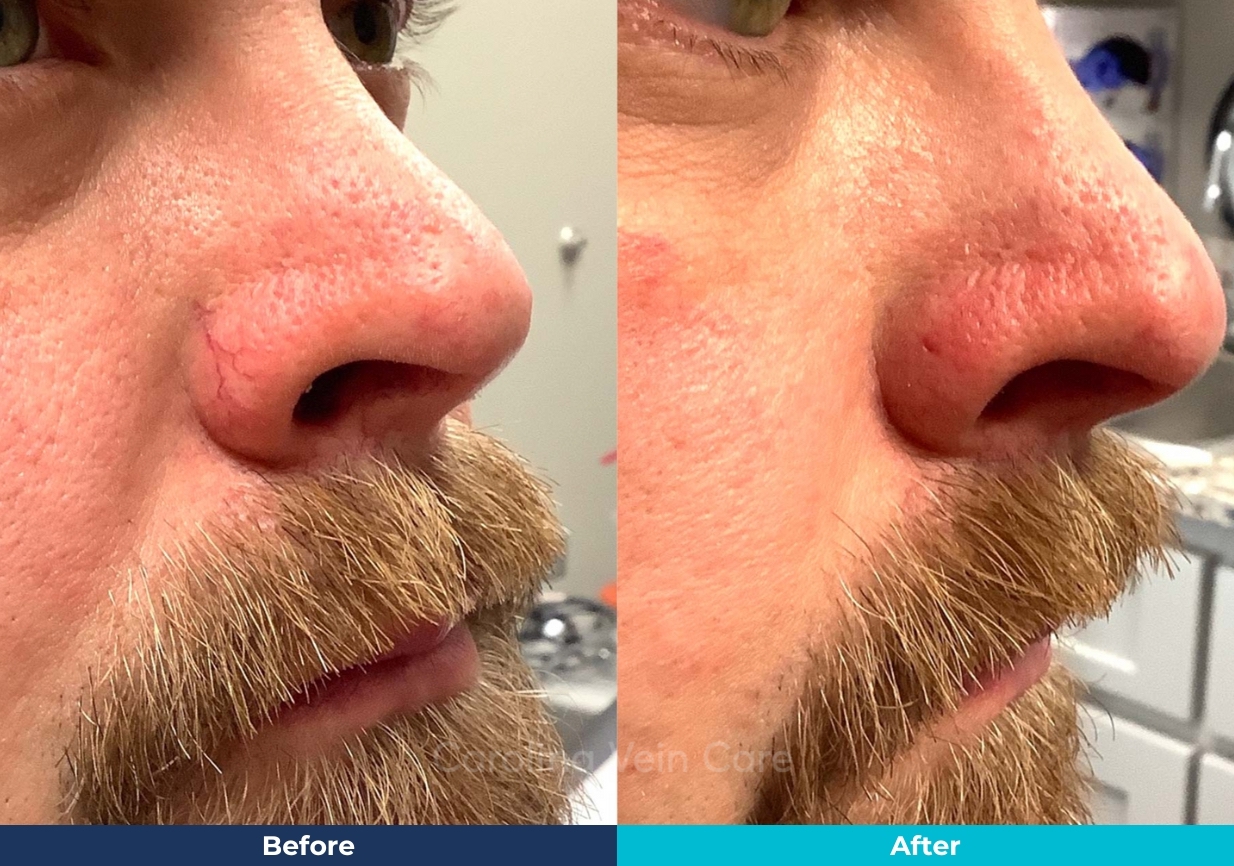
Nose Vein Sclerotherapy Before & After
These before-and-after examples show improvement in visible nose and facial veins following treatment at Carolina Vein Care & Aesthetics. Individual results vary.
Nose Vein Treatment Result
Before and after treatment of visible superficial vessels around the nose.
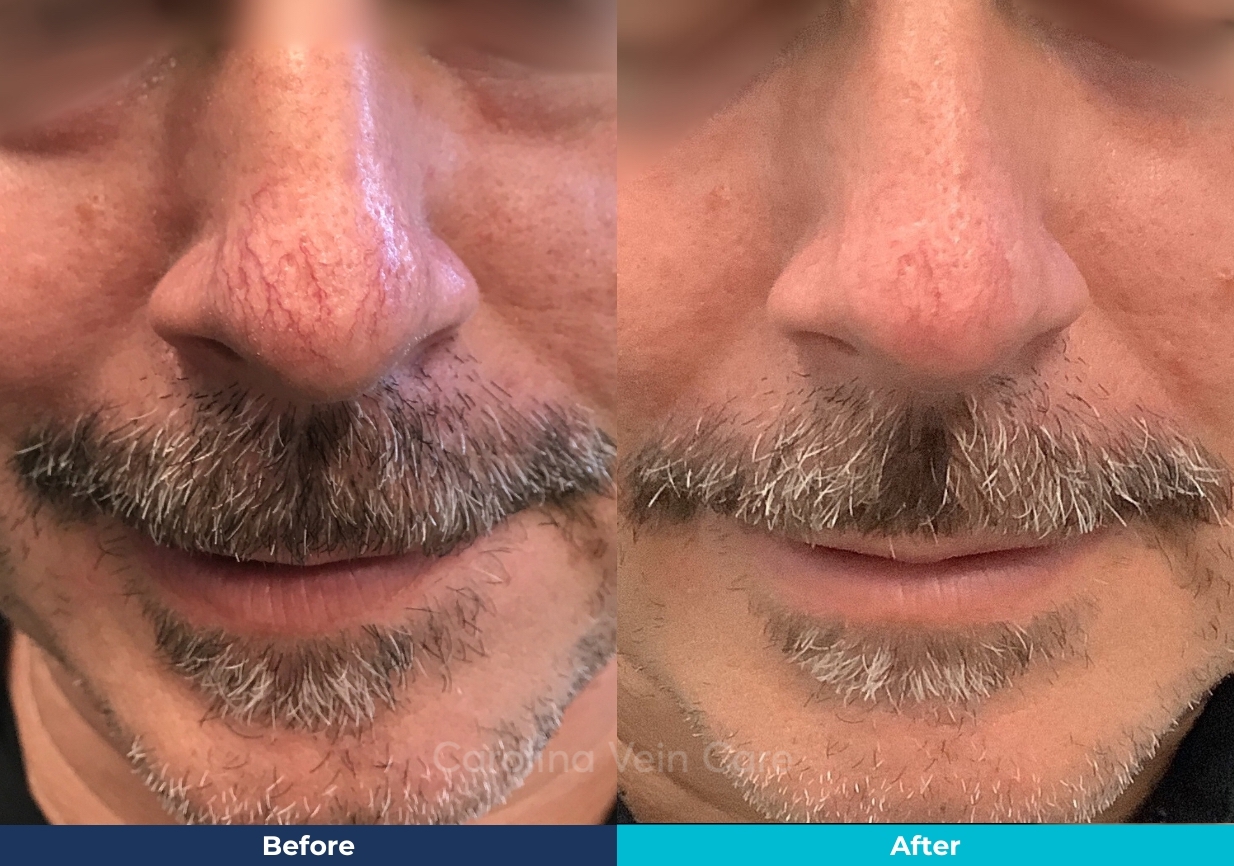
Facial Nose Vein Sclerotherapy Result
Reduction in the appearance of unwanted cosmetic veins around the nose following treatment.
Not sure whether your visible vessels can be treated?
An evaluation with Dr. Park can determine what type of vessel is visible and whether sclerotherapy may be an appropriate option.
When Will Nose Vein Treatment Results Become Visible?
Sclerotherapy begins a healing process rather than instantly erasing the treated vessel. After treatment, the targeted vein closes and gradually becomes less noticeable.
The speed and degree of improvement can differ depending on the vessel's size, depth and location as well as the patient's individual response.
Some patients may benefit from additional treatment if another vessel remains visible or if more than one vessel contributes to the cosmetic concern. Dr. Park can evaluate your progress and determine whether further treatment is appropriate.
A successfully treated vessel may remain closed, but new facial veins can develop or become visible in the future. These can be evaluated separately if they become a cosmetic concern.
Why Precision Matters When Treating Veins Around the Nose
The nose and central face contain an important network of blood vessels. That makes careful evaluation especially important before treating a visible vessel.
Dr. Park's background in Interventional Radiology gives her advanced training in vascular anatomy and minimally invasive procedures involving blood vessels.
Her experience in aesthetic vein care adds another important consideration: the treatment should improve the unwanted vessel without creating an unnatural-looking result.
Redness Is Not Always the Same as a Treatable Vein
Facial redness can have several causes. Some patients have individual visible vessels, while others may have diffuse redness or another skin concern.
An examination allows Dr. Park to determine what is actually visible and whether sclerotherapy is appropriate for that particular vessel.
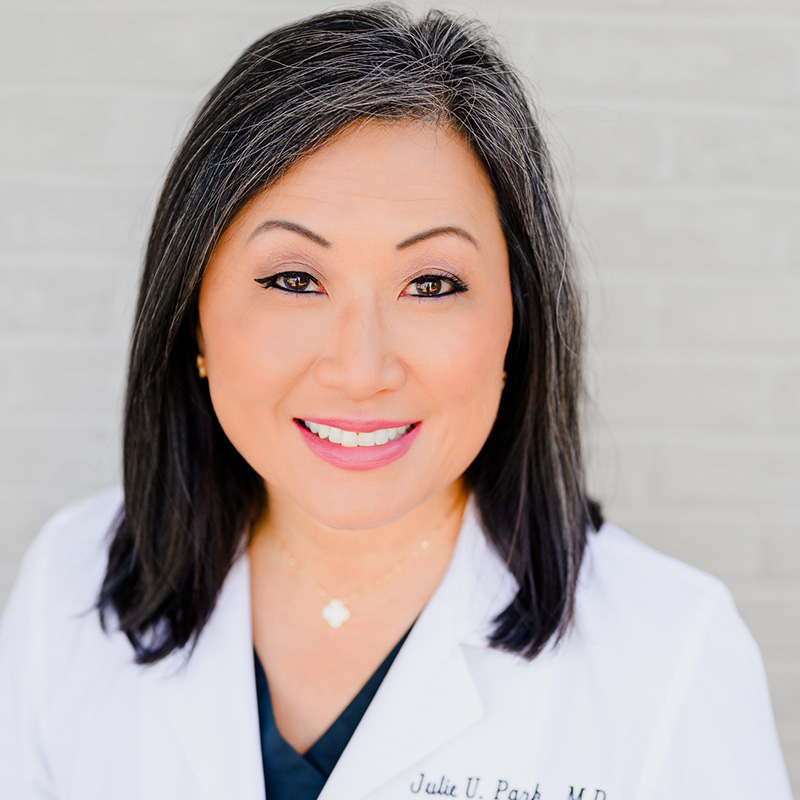
Why Choose Dr. Julie Park for Nose Vein Treatment?
When treating visible veins in the center of the face, precision and experience matter. Dr. Julie Park is board-certified in both Interventional Radiology and Diagnostic Radiology and has more than 20 years of experience in venous and aesthetic medicine.
Her expertise spans both the medical and cosmetic aspects of vein care. That combination allows her to evaluate the vessel itself while also considering how treatment will affect the appearance of the surrounding facial area.
Dr. Park does not assume that every visible red or blue facial vessel should receive the same treatment. She evaluates the anatomy first, discusses realistic expectations and develops a treatment plan around the individual patient's concern.
Dr. Park's Credentials Include:
- Board-Certified in Interventional Radiology
- Board-Certified in Diagnostic Radiology
- Fellowship in Interventional Radiology at Northwestern University
- Former Clinical Assistant Professor of Radiology at the University of Chicago-affiliated Weiss Memorial Hospital
- Extensive hospital and private practice experience
- Invited speaker and educator at professional medical society meetings
- Member, Society of Interventional Radiology
- Member, American Vein and Lymphatic Society
- Member, Southeastern Angiographic Society
- Member, South Carolina Medical Society
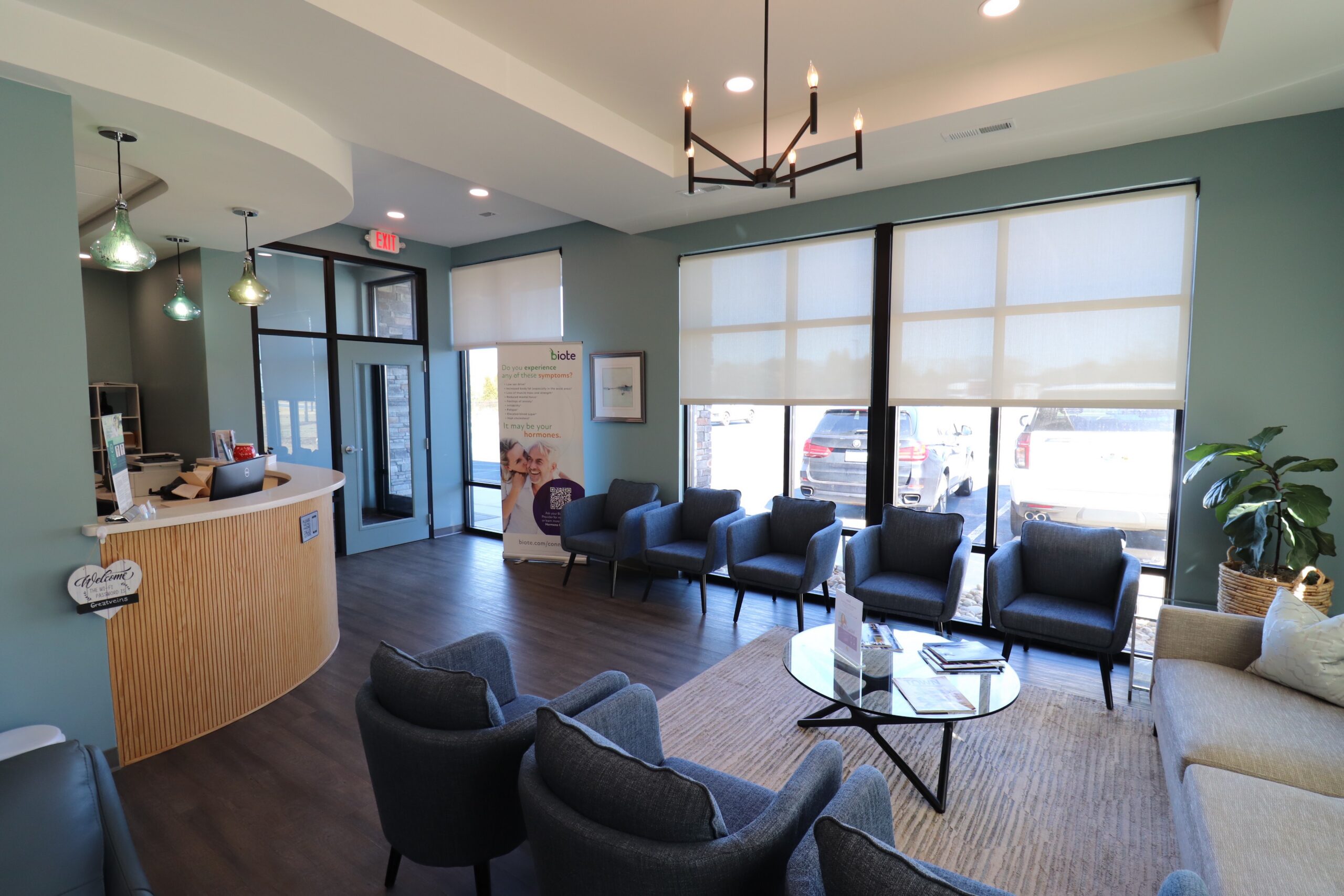
About Carolina Vein Care & Aesthetics
Carolina Vein Care & Aesthetics is an independent, physician-owned practice in Simpsonville, South Carolina, serving patients from Greenville, Five Forks, Greer, Spartanburg and communities throughout the Upstate.
The practice is led by Dr. Julie Park, a board-certified interventional radiologist, and Dr. Mark Jackson, a board-certified vascular surgeon.
Along with comprehensive medical vein care, Carolina Vein Care offers physician-led aesthetic treatments including specialized sclerotherapy for visible veins of the face, hands and legs.
Specialized Care in a Welcoming Local Practice
Cosmetic facial vein treatment is a personal decision. Our goal is to give you clear information and an individualized treatment plan in a comfortable medical environment.
From your consultation through follow-up, you can ask questions directly and understand why Dr. Park recommends a particular approach for your visible facial veins.
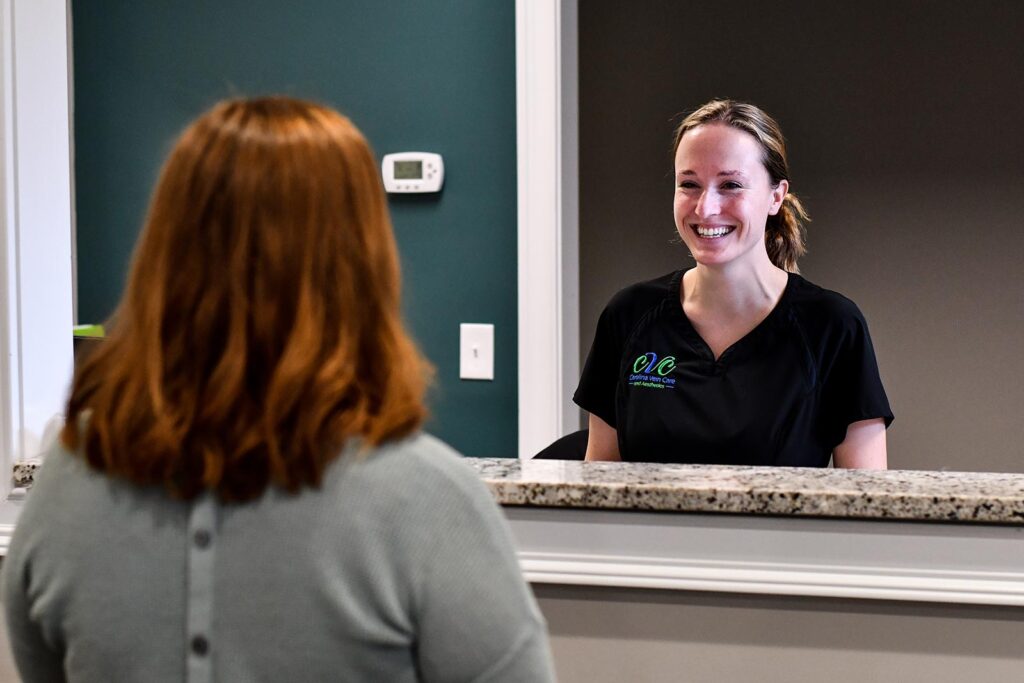
Get to Know Carolina Vein Care & Aesthetics
Learn more about our physicians, practice and approach to caring for patients throughout Simpsonville, Greenville and the surrounding Upstate.
Nose Vein Treatment FAQs
What causes visible veins around the nose?
Visible nose veins can be influenced by genetics, individual vascular anatomy, naturally superficial facial vessels and changes in the skin and supporting tissues that make underlying vessels easier to see.
Are nose veins the same as spider veins?
Some very small visible vessels around the nose may be described as spider veins or telangiectatic vessels, while others may be somewhat larger superficial facial veins. An examination helps determine what type of vessel is present.
Are visible nose veins dangerous?
Many visible superficial nose veins are primarily a cosmetic concern. Dr. Park evaluates the vessel before treatment to determine whether it is appropriate for cosmetic sclerotherapy.
Can nose veins be removed without surgery?
Appropriate visible nose veins may be treated using minimally invasive sclerotherapy. The treatment uses a small injection rather than a surgical incision.
How does sclerotherapy work for nose veins?
A small amount of sclerosing medication is injected into the targeted vessel. The medication causes the vessel to close and gradually shrink, making it less visible as healing progresses.
Is nose vein sclerotherapy safe?
Patient selection and precise technique are important when treating facial veins. Dr. Park examines each visible vessel to determine whether sclerotherapy is appropriate before performing treatment.
What should I expect after nose vein treatment?
Temporary redness, swelling, tenderness or bruising can occur after treatment. Dr. Park provides individualized aftercare instructions based on the vessel and extent of treatment.
How quickly will a treated nose vein disappear?
Improvement occurs as the treated vessel closes and heals. The timing varies depending on the size and depth of the vessel and the patient's individual response.
Will I need more than one nose vein treatment?
Some vessels may respond well to one treatment, while others may require additional treatment. Dr. Park evaluates your progress and determines whether another session may be beneficial.
Can nose veins come back after treatment?
A successfully treated vessel may remain closed, but new facial veins can become visible over time. New vessels can be evaluated separately if they become a cosmetic concern.
Who performs nose vein treatment at Carolina Vein Care?
Cosmetic facial vein treatment is performed by Dr. Julie Park, a board-certified interventional and diagnostic radiologist with more than 20 years of medical experience and expertise in cosmetic vein care.
Where is Carolina Vein Care located?
Carolina Vein Care & Aesthetics is located at 2817 Woodruff Road in Simpsonville, South Carolina, serving patients from Greenville, Five Forks, Greer, Spartanburg and surrounding Upstate communities.
Are Visible Nose Veins Bothering You?
Meet with Dr. Julie Park to determine what type of vessel is visible and whether sclerotherapy may be an appropriate treatment for you.
Carolina Vein Care & Aesthetics · 2817 Woodruff Road · Simpsonville, SC 29681