
Forehead Vein Treatment in Simpsonville, SC
Prominent blue or bulging forehead veins can become increasingly noticeable and may make the forehead look more vascular than you would like. Dr. Julie Park treats appropriate forehead veins using precise, minimally invasive sclerotherapy.
Forehead veins can vary considerably. Some patients notice a single larger blue vein extending across the forehead, while others see branching vessels near the temples or hairline.
At Carolina Vein Care & Aesthetics in Simpsonville, Dr. Julie Park evaluates the size, depth, location and course of the visible vein before recommending treatment. Her goal is to reduce unwanted vein prominence while preserving a natural facial appearance.
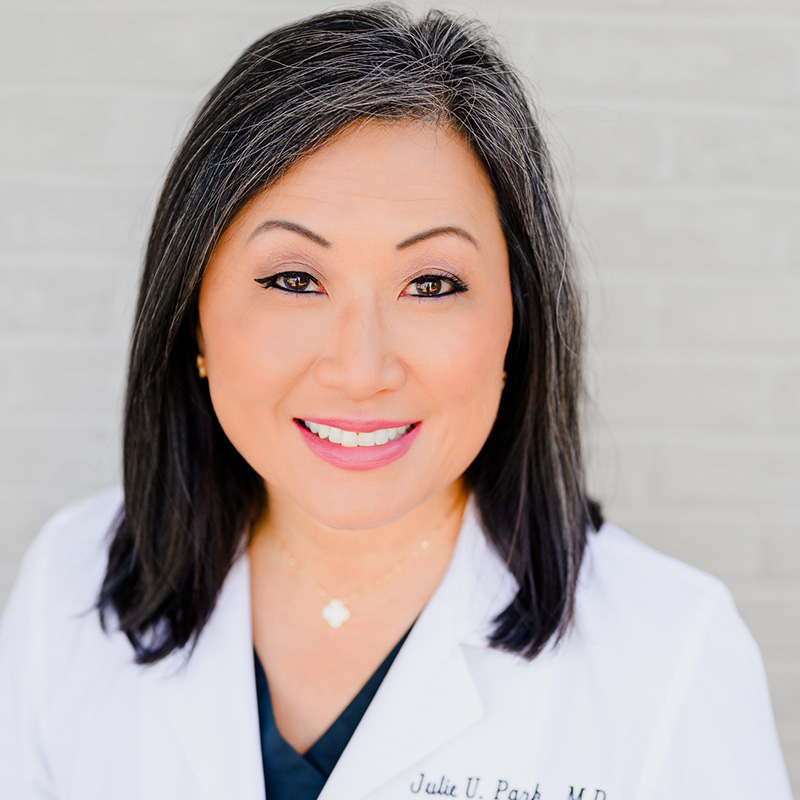
Meet Dr. Julie Park
When treating a prominent vein across the forehead, understanding vascular anatomy matters.
Dr. Julie Park is board-certified in both Interventional Radiology and Diagnostic Radiology and has more than 20 years of medical experience in venous and aesthetic medicine.
Her background combines detailed knowledge of blood vessels with experience treating cosmetic veins in visible and delicate facial areas.
Dr. Park evaluates forehead veins individually to determine whether sclerotherapy is appropriate and how treatment can be performed while preserving a natural-looking result.
- Board-Certified in Interventional Radiology
- Board-Certified in Diagnostic Radiology
- Fellowship-Trained at Northwestern University
- More than 20 years of medical experience
What Are Prominent Forehead Veins?
Forehead veins are superficial veins that run beneath the skin of the forehead and temple area. Everyone has veins in this region, but in some people they become much easier to see.
Unlike the very fine red vessels that people often call spider veins, a prominent forehead vein may be larger, blue or green in color and sometimes raised above the surrounding skin.
Some vessels follow a relatively straight path, while others branch across the forehead or connect with visible veins near the temples. Their appearance can also change depending on facial expression, activity and normal changes in blood flow.
In many cases, a visible forehead vein is primarily a cosmetic concern. The key question is not simply whether a vein can be seen, but whether it is an appropriate vessel to treat.
Why Are My Forehead Veins More Visible?
One of the most common questions patients ask is why a forehead vein that was once barely noticeable has become easier to see.
Genetics and individual vascular anatomy can play a significant role. Some people simply have larger or more superficial veins across the forehead and temples.
Changes in the skin and underlying facial tissue may also make a vein more apparent. As the amount of soft tissue covering the vessel changes, a vein that was always present can become more visually prominent.
Veins can also temporarily appear fuller when blood flow increases, which is why some people notice them more during certain activities or facial expressions.
- Genetics and natural vascular anatomy
- Thin skin or changes in skin thickness
- Changes in facial volume and supporting tissue
- Temporary increases in blood flow
Why Do People Seek Treatment for Forehead Veins?
A prominent forehead vein is often medically harmless but can still become a significant cosmetic concern.
Because the forehead is broad and highly visible, a larger blue vein can draw attention even when the rest of the skin appears smooth. Patients may become especially aware of the vessel in photographs, video calls or when seeing themselves from different angles.
Some people also notice that the vein becomes more prominent with certain expressions or activity, which can make the appearance seem unpredictable.
Treatment is intended to reduce the prominence of the unwanted vessel without changing the natural contours or expression of the face.
The goal is not to make the forehead look treated. It is to make the unwanted vein less noticeable.
Do Forehead Veins Require Surgery?
For appropriate cosmetic forehead veins, treatment does not necessarily require surgery. Dr. Park may use sclerotherapy, a minimally invasive technique that treats the vessel through a small injection rather than an incision.
During sclerotherapy, a small amount of medication is placed carefully into the selected vein. The medication irritates the inside of the vessel and causes it to close.
As healing occurs, the treated vein gradually shrinks and becomes less visible. Blood continues to circulate through other normal blood vessels.
Because forehead veins can be larger and follow different anatomical paths, the first step is determining whether the particular vein is appropriate for sclerotherapy.
What to Expect During Forehead Vein Treatment
Treatment begins with a physician evaluation. Dr. Park examines the vessel, its path across the forehead and its relationship to the surrounding facial anatomy.
If the vein is appropriate for sclerotherapy, treatment is performed in the office using a small needle. The sclerosing medication is placed directly into the targeted vessel.
The amount of treatment depends on the individual vein. Some patients have one dominant vessel, while others have a branching pattern or several visible veins extending toward the temples.
The objective is not simply to inject wherever a vein can be seen. Dr. Park selects the vessel and treatment approach based on the specific anatomy in front of her.
An Individual Treatment Plan
Forehead vein patterns differ from one person to another. The treatment plan should reflect the vessel's size, location and course rather than using the same approach for every patient.
Recovery and Aftercare
Sclerotherapy is minimally invasive, but the treated vessel and surrounding tissues still go through a healing process after the procedure.
Temporary redness, swelling, tenderness or bruising may occur. The treated vein may also look or feel different before it gradually becomes less noticeable.
Dr. Park provides individualized instructions based on the vessel that was treated. Following those recommendations helps support normal healing after the procedure.
Questions About Your Recovery?
Contact Carolina Vein Care if you experience a symptom you are concerned about or have questions about your post-treatment instructions.
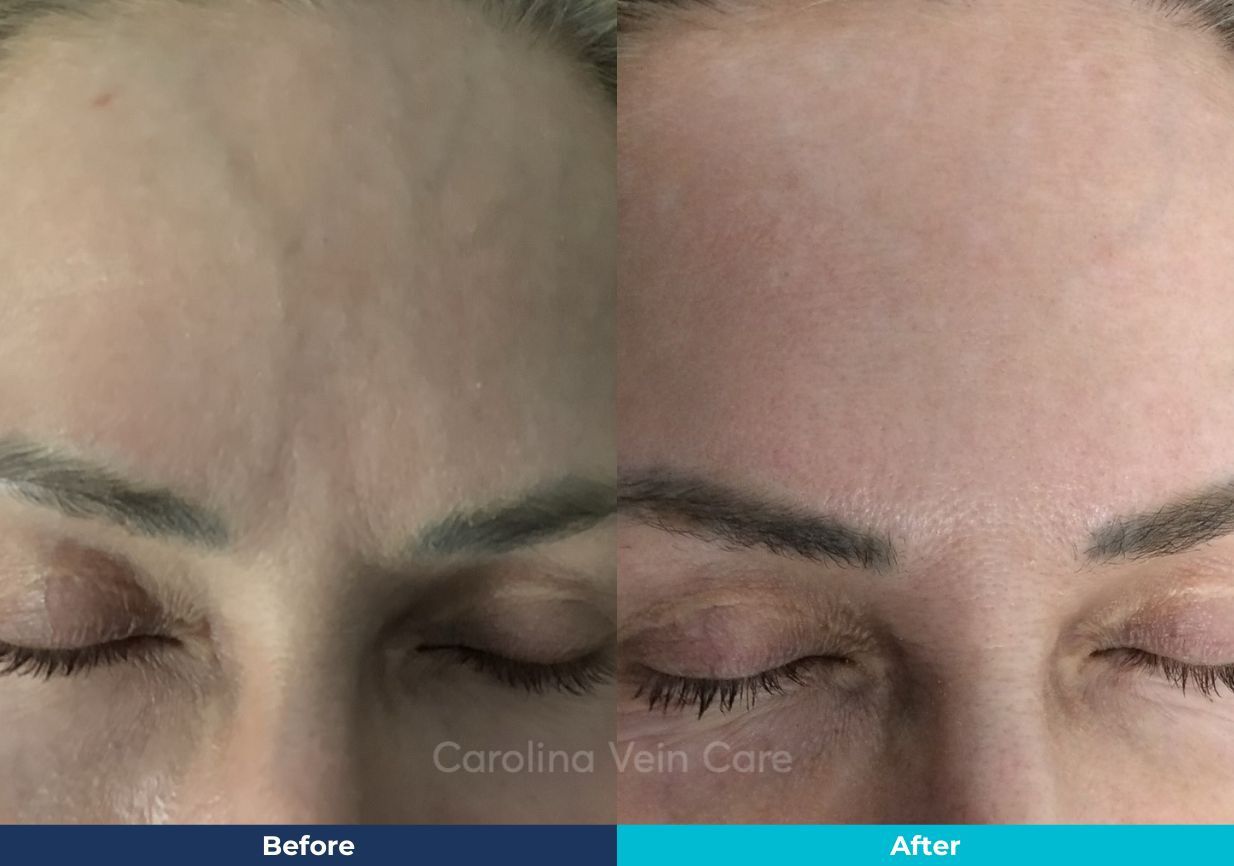
Forehead Vein Sclerotherapy Before & After
These before-and-after examples show improvement in the appearance of prominent forehead veins following treatment at Carolina Vein Care & Aesthetics. Individual results vary.
Forehead Vein Treatment Result
Before and after improvement in the appearance of a prominent forehead vein following sclerotherapy.
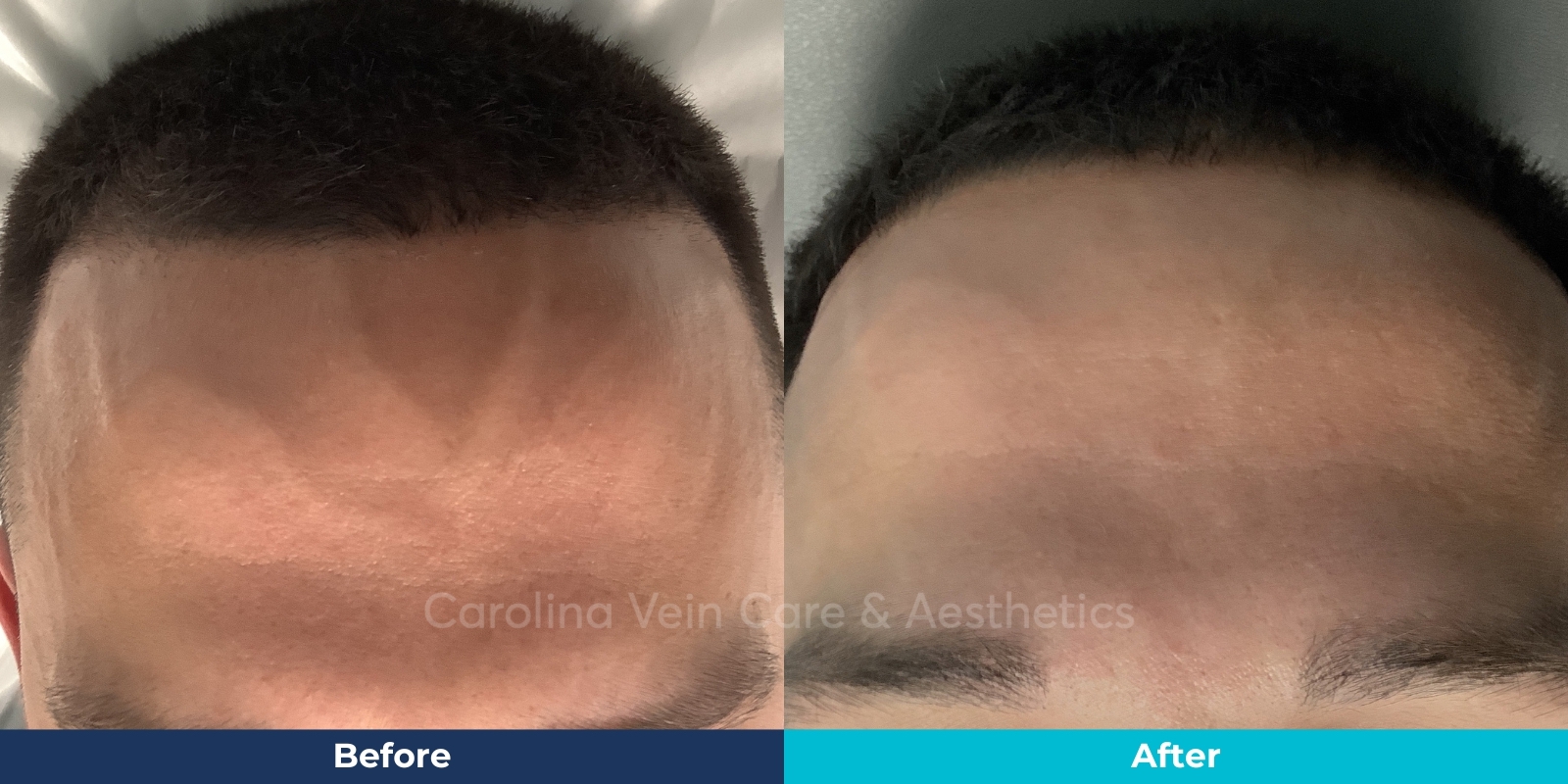
Visible Forehead Vein Result
Reduction in the appearance of an unwanted superficial forehead vein following treatment.
Wondering whether your forehead vein can be treated?
Dr. Park can evaluate the vessel and determine whether sclerotherapy may be an appropriate treatment option.
When Will Forehead Vein Treatment Results Become Visible?
Sclerotherapy starts a healing process within the treated vessel. The vein does not necessarily disappear immediately after treatment.
As the vessel closes and shrinks, it can gradually become less visible. The amount and timing of improvement differ according to the size, location and characteristics of the vein and the patient's individual response.
Some patients may benefit from additional treatment if part of a vessel remains prominent or if several veins contribute to the appearance. Dr. Park evaluates progress and determines whether additional treatment is appropriate.
A successfully treated vein may remain closed, but new forehead or facial veins can become more visible over time. Those vessels can be evaluated separately if desired.
Why Precision Matters When Treating Forehead Veins
A larger forehead vein is not simply a cosmetic line on the skin. It is part of the facial vascular system, which makes understanding its anatomy important before treatment.
Dr. Park's training in Interventional Radiology is centered on blood vessels and minimally invasive vascular procedures. That background is particularly relevant when evaluating prominent facial veins.
Her experience in aesthetic medicine adds the cosmetic perspective: treatment should make the unwanted vein less noticeable without making the forehead look unnatural.
Prominent Does Not Automatically Mean Problematic
A visible forehead vein may be harmless even when it is large or noticeable.
The purpose of the consultation is to determine what vessel is present, whether it is appropriate to treat and what result can reasonably be expected.
Why Choose Dr. Julie Park for Forehead Vein Treatment?
When it comes to treating prominent facial veins, vascular expertise and aesthetic judgment are both important.
Dr. Julie Park is board-certified in both Interventional Radiology and Diagnostic Radiology and has more than 20 years of experience in venous and aesthetic medicine.
Her expertise allows her to evaluate the vein medically while also considering the cosmetic result. Treatment is individualized around the patient's vascular anatomy and the appearance they hope to improve.
Dr. Park's Credentials Include:
- Board-Certified in Interventional Radiology
- Board-Certified in Diagnostic Radiology
- Fellowship in Interventional Radiology at Northwestern University
- Former Clinical Assistant Professor of Radiology at the University of Chicago-affiliated Weiss Memorial Hospital
- Extensive hospital and private practice experience
- Invited speaker and educator at professional medical society meetings
- Member, Society of Interventional Radiology
- Member, American Vein and Lymphatic Society
- Member, Southeastern Angiographic Society
- Member, South Carolina Medical Society

About Carolina Vein Care & Aesthetics
Carolina Vein Care & Aesthetics is an independent, physician-owned practice in Simpsonville, South Carolina, serving patients from Greenville, Five Forks, Greer, Spartanburg and communities throughout the Upstate.
The practice is led by Dr. Julie Park, a board-certified interventional radiologist, and Dr. Mark Jackson, a board-certified vascular surgeon.
Along with comprehensive medical vein care, Carolina Vein Care offers physician-led aesthetic treatments including specialized sclerotherapy for visible veins of the face, hands and legs.
Specialized Care in a Welcoming Local Practice
Cosmetic facial vein treatment is a personal decision. Our goal is to provide clear information and an individualized treatment plan in a comfortable medical setting.
From your consultation through follow-up, you can ask questions directly and understand why Dr. Park recommends a particular treatment approach for your visible vein.

Get to Know Carolina Vein Care & Aesthetics
Learn more about our physicians, practice and approach to caring for patients throughout Simpsonville, Greenville and the surrounding Upstate.
Forehead Vein Treatment FAQs
Why are the veins on my forehead so visible?
Genetics, natural vascular anatomy, thin skin and changes in facial volume can all make forehead veins easier to see. Veins may also temporarily become more prominent when blood flow increases.
Are prominent forehead veins dangerous?
Many visible forehead veins are primarily a cosmetic concern. Dr. Park evaluates the vessel before treatment to determine whether cosmetic treatment is appropriate.
Why does my forehead vein sometimes bulge more than at other times?
The appearance of superficial veins can change as blood flow and pressure within the vessel change. This can make a vein more prominent during certain activities or facial expressions.
Do forehead veins require surgery?
Appropriate cosmetic forehead veins may be treated with minimally invasive sclerotherapy rather than surgery. Dr. Park determines whether the individual vein is appropriate for this approach.
How does sclerotherapy work for forehead veins?
A small amount of sclerosing medication is injected into the selected vessel. The medication causes the treated vein to close and gradually shrink as healing occurs.
Is forehead vein sclerotherapy safe?
Careful patient selection and knowledge of facial vascular anatomy are important. Dr. Park evaluates the vessel before determining whether sclerotherapy is an appropriate treatment.
What should I expect after forehead vein treatment?
Temporary redness, swelling, tenderness or bruising may occur after treatment. Dr. Park provides individualized aftercare instructions based on the vein and extent of treatment.
How quickly will the forehead vein disappear?
The vessel gradually becomes less visible as it closes and heals. The timing and amount of improvement vary according to the vein and the individual patient's response.
Will I need more than one treatment?
Some veins may respond well to one treatment, while others may require additional treatment. Dr. Park evaluates your progress before recommending another session.
Can forehead veins come back?
A successfully treated vessel may remain closed, but new forehead or facial veins can become visible over time and can be evaluated separately.
Who performs forehead vein treatment at Carolina Vein Care?
Cosmetic forehead vein treatment is performed by Dr. Julie Park, a board-certified interventional and diagnostic radiologist with more than 20 years of medical experience in venous and aesthetic medicine.
Where is Carolina Vein Care located?
Carolina Vein Care & Aesthetics is located at 2817 Woodruff Road in Simpsonville, South Carolina, serving Greenville, Five Forks, Greer, Spartanburg and surrounding Upstate communities.
Is a Prominent Forehead Vein Bothering You?
Meet with Dr. Julie Park to determine what type of vein is visible and whether sclerotherapy may be an appropriate treatment for you.
Carolina Vein Care & Aesthetics · 2817 Woodruff Road · Simpsonville, SC 29681